
The 5-4-3-2-1 Grounding Technique: How the 54321 Method Works
Name 5 things you can see, 4 you can feel, 3 you can hear, 2 you can smell, 1 you can taste. A step-by-step guide to the 5-4-3-2-1 grounding technique, when it helps, and how to adapt it.
Part of our guide to 50 grounding techniques for anxiety, PTSD and CPTSD.
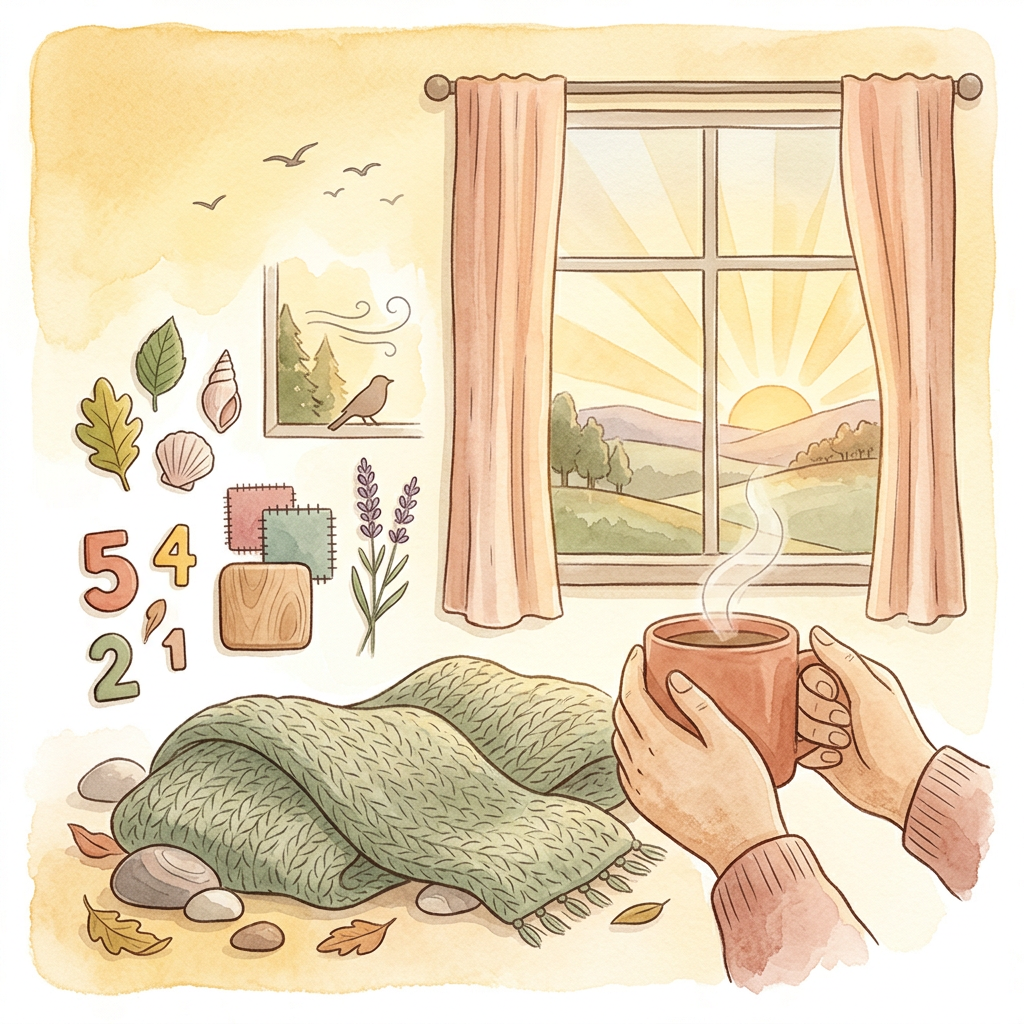
The 5-4-3-2-1 grounding technique — often written as the 54321 method — is a short sensory exercise that uses your five senses to interrupt anxiety, panic, dissociation, or a flashback and bring your attention back to the present moment. You name 5 things you can see, 4 you can feel, 3 you can hear, 2 you can smell, and 1 you can taste. It takes about sixty seconds, needs nothing but your own senses, and nobody around you has to know you are doing it.
At Recovery Trauma™, we know those moments are a very real part of surviving. This guide walks through the method step by step, when it helps, when it doesn't, and how to adapt it so it actually works for your nervous system.
What is the 5-4-3-2-1 grounding technique?
It is a practice that walks you down through your five senses to interrupt overwhelming feelings. By deliberately noticing the world around you, you gently guide your mind away from distressing thoughts, memories, or future worries and back into the safety of the present.
It doesn't remove the feeling. It creates enough space for you to catch your breath and feel more in control — a moment of now when your brain is stuck in then or what if.
Why the 54321 method works
Grounding is not a distraction trick. When you are overwhelmed, the threat-detection part of your brain is running the show and your thinking brain has gone quiet. Naming what is physically around you does three things:
- It gives your attention a job. Sensory input competes with rumination; your brain cannot fully do both at once.
- It provides present-tense evidence. A flashback insists you are back then. Five visible objects from now are a quiet, factual disagreement.
- It slows you down. Counting down from five to one imposes a pace, and pace alone starts to settle breathing.
The 54321 method, step by step
There's no pressure to do this perfectly. The goal is simply to notice. Take a slow breath if you can, and begin. Acknowledge each item silently to yourself.
- 5 — Notice FIVE things you can SEE. Look around and name five things. A blue pen, a crack in the pavement, a leaf moving in the wind, a pattern on your jumper, light reflecting on a surface. Let your eyes rest on each one for a moment.
- 4 — Notice FOUR things you can FEEL. This is physical touch. The texture of your jeans against your skin, the smooth surface of a desk, the temperature of the air, your feet firmly on the floor. Touch objects gently if that feels safe for you.
- 3 — Notice THREE things you can HEAR. The hum of a computer, birdsong outside, distant traffic, your own breathing. Don't judge the sounds, just acknowledge them.
- 2 — Notice TWO things you can SMELL. Coffee, soap on your hands, rain, a nearby perfume. If you can't smell anything, notice the neutral scent of the air, or name two smells you like.
- 1 — Notice ONE thing you can TASTE. The lingering taste of your last meal, mint from toothpaste, or simply the natural taste of your mouth. A sip of water counts.
Then take one more breath and notice how you feel. There is no right or wrong outcome.
A 60-second version for panic
If counting feels like too much, shorten it: name three things you can see, say them out loud, press your feet into the floor, and name where you are and what today's date is. Out loud matters — hearing your own voice adds a second sensory channel.
When grounding techniques for anxiety and PTSD help
This is a tool you can keep in your pocket for when things get difficult. It isn't a cure, but it can be a real support. People find the 5-4-3-2-1 technique useful during:
- Moments of intense anxiety or the beginning of a panic attack.
- Dissociation — feeling disconnected from your body, or that the world looks flat or unreal.
- Emotional flashbacks in PTSD and CPTSD, to reconnect with present safety.
- Loops of distressing thoughts, rumination, or 3am worry.
- The pull of a trauma bond, when craving contact feels physical.
- Any moment of overwhelm where you need to create a little calm.
When it doesn't work — and what to do instead
Grounding fails sometimes, and that is information, not failure.
- If you are so activated you can't focus, move first. Push against a wall, run cold water over your wrists, walk to the end of the road, then try the senses.
- If you feel numb or far away, sharper input often lands better than gentle noticing: an ice cube, a strong mint, a cold drink.
- If focusing on your body feels unsafe, stay external — count only what you can see and hear, and skip touch entirely.
- If it makes you more anxious, stop. Some people find counting itself pressuring. Try a longer exhale instead, or one of the 50 grounding techniques until you find your own.
A gentle safety note: grounding is a coping strategy, not a crisis intervention. If you are in crisis, feeling unsafe, or worried you might harm yourself, please reach out for immediate support. In the UK you can call 999 or 111, or contact the Samaritans on 116 123. You are not alone.
Making the practice your own
Not every technique works for every person, or even for the same person every time. The most important thing is to adapt tools to fit you.
If one sense feels triggering, change the numbers — five things you can see, five you can hear, five you can feel. If scents carry difficult memories, skip that step. Practise it once a day when you are calm, not only in crisis, so the pathway is familiar when you need it most.
This is a personal practice, not a replacement for therapy or medical advice, but it can be a steady part of your wellbeing toolkit.
What to try today... Pick one object near you. Slowly describe it to yourself. Its exact colour and shape. What you imagine its texture is like. What sound it would make if you tapped it. Tuning into just one thing is a mini-grounding practice in itself.
Bringing yourself back to the present moment is an act of profound self-compassion. The 5-4-3-2-1 grounding technique is one path back to yourself when you feel lost in the storm — a reminder that whatever your mind is telling you, you are here, in this moment, and you can get through it.
Practices that go with this article
These guided practices are part of Recovery Trauma™ membership. They were chosen to match what you have just been reading.
Ready to put what you've learned into practice?
Recovery Trauma™ gives you access to guided exercises, grounding and nervous-system practices, journals, healing journeys, assessments and other recovery resources — all in one place.
Join Recovery Trauma™Already a member? Sign in to go straight there.
Sources & further reading
- Breathing exercises for stress — NHS
- Post-traumatic stress disorder (PTSD) — overview — NHS
- National Center for PTSD — U.S. Department of Veterans Affairs
These sources are for general education. Recovery Trauma™ does not diagnose or treat — please speak to a qualified professional about your own situation.
Cite this article: Recovery Trauma™ (2026). “The 5-4-3-2-1 Grounding Technique: How the 54321 Method Works.” Recovery Trauma™. https://recoverytrauma.com/blog/5-4-3-2-1-grounding-technique-guide
Keep going with Recovery Trauma™
Wellbeing is not something you do alone. Here's what's next.
Frequently asked questions
What is the 5-4-3-2-1 grounding technique?
It is a one-minute sensory exercise: you name 5 things you can see, 4 you can feel, 3 you can hear, 2 you can smell, and 1 you can taste. Working down through your senses interrupts anxiety, panic, or dissociation and returns your attention to the present moment.
How does the 54321 method work?
Naming sensory details gives your attention a competing task, supplies present-tense evidence that contradicts a flashback or worry spiral, and imposes a slower pace that begins to settle your breathing.
When should I use the 5-4-3-2-1 technique?
At the start of a panic attack, during dissociation, in an emotional flashback, in loops of distressing thought, or any time you feel overwhelmed. It also helps to practise it once a day when you are calm, so the pathway is familiar when you need it.
Does the 5-4-3-2-1 technique help with PTSD flashbacks?
Many people with PTSD and CPTSD use it to reconnect with present safety during an emotional flashback. It is a coping skill rather than a treatment, and works best alongside trauma-informed support.
What if the 5-4-3-2-1 technique doesn't work for me?
That is common and it is information, not failure. If you are too activated to focus, move first — push against a wall or use cold water. If you feel numb, sharper input such as an ice cube or a strong mint often lands better. If counting itself feels pressuring, try a longer exhale instead.
Can I change the order or skip a sense?
Yes. Adapt it freely — skip smell if scents carry difficult memories, stay with sight and sound if focusing on your body feels unsafe, or use five of each. The power is in making it yours.
Keep reading
Related articles

Grounding
50 Grounding Techniques for Anxiety, PTSD & Complex PTSD
Fifty grounding techniques — sensory, physical, cognitive, and relational — to bring you back to the present when anxiety, panic, or a flashback pulls you under.

Grounding
Grounding 101: What to Do When the Body Activates
Simple, portable grounding practices you can use the moment the nervous system tips into fight, flight, freeze, or fawn — no equipment, no perfect timing.