Grounding 101: What to Do When the Body Activates
Simple, portable grounding practices you can use the moment the nervous system tips into fight, flight, freeze, or fawn — no equipment, no perfect timing.
Part of our guide to 50 grounding techniques for anxiety, PTSD and CPTSD.

When the body says "danger" and the mind cannot argue it down
Grounding is not a way to think yourself calm. It is a way to give the nervous system enough current sensory evidence that this moment is safe, so it can begin to settle.
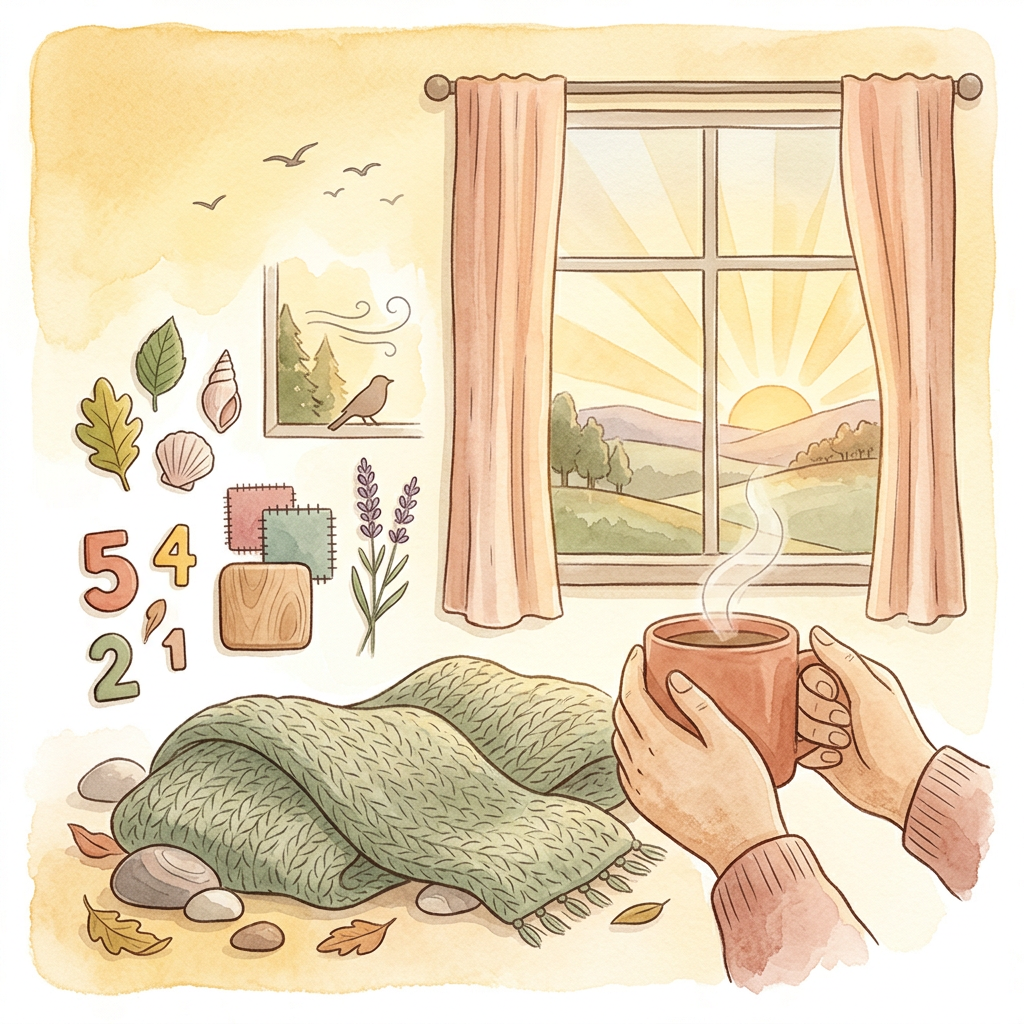
The 5-4-3-2-1 that actually works
Slow it down. Name each thing out loud if you can.
- 5 things you can see — actually look at them
- 4 things you can feel — the chair, the floor, fabric on your skin
- 3 things you can hear — near, far, and inside the room
- 2 things you can smell — or two you remember
- 1 slow breath out that is longer than the breath in
Cold water on the face
A short splash of cold water on the face triggers the mammalian dive response, which slows the heart. This is genuinely fast — not a metaphor.
Feet-on-floor
Both feet flat, weight pressed down, notice the floor pressing back. Ten seconds. Then again.
When grounding is not enough
If activation is constant, or the tools stop reaching you, that is information — not failure. Support beyond self-help is how many people actually recover. A trauma-informed therapist, or a community that gets it, changes what is possible.
Practices that go with this article
These guided practices are part of Recovery Trauma™ membership. They were chosen to match what you have just been reading.
Ready to put what you've learned into practice?
Recovery Trauma™ gives you access to guided exercises, grounding and nervous-system practices, journals, healing journeys, assessments and other recovery resources — all in one place.
Join Recovery Trauma™Already a member? Sign in to go straight there.
Sources & further reading
- Breathing exercises for stress — NHS
- Post-traumatic stress disorder (PTSD) — overview — NHS
- National Center for PTSD — U.S. Department of Veterans Affairs
These sources are for general education. Recovery Trauma™ does not diagnose or treat — please speak to a qualified professional about your own situation.
Cite this article: Recovery Trauma™ (2026). “Grounding 101: What to Do When the Body Activates.” Recovery Trauma™. https://recoverytrauma.com/blog/grounding-101-when-the-body-activates
Keep going with Recovery Trauma™
Wellbeing is not something you do alone. Here's what's next.
Keep reading
Related articles

Grounding
50 Grounding Techniques for Anxiety, PTSD & Complex PTSD
Fifty grounding techniques — sensory, physical, cognitive, and relational — to bring you back to the present when anxiety, panic, or a flashback pulls you under.
Grounding
The 5-4-3-2-1 Grounding Technique: How the 54321 Method Works
Name 5 things you can see, 4 you can feel, 3 you can hear, 2 you can smell, 1 you can taste. A step-by-step guide to the 5-4-3-2-1 grounding technique, when it helps, and how to adapt it.